
AI agent builder: identity, scripts, tools, and limits
Plan an agent in Sonrat.ai: define its purpose, voice, business knowledge, conversation instructions, connected tools, and publishing checks.
Give the agent one clear purpose
Before choosing a voice, decide what the agent should help a customer accomplish. Answering a product question, collecting a support request, and qualifying a sales enquiry need different instructions and end states.
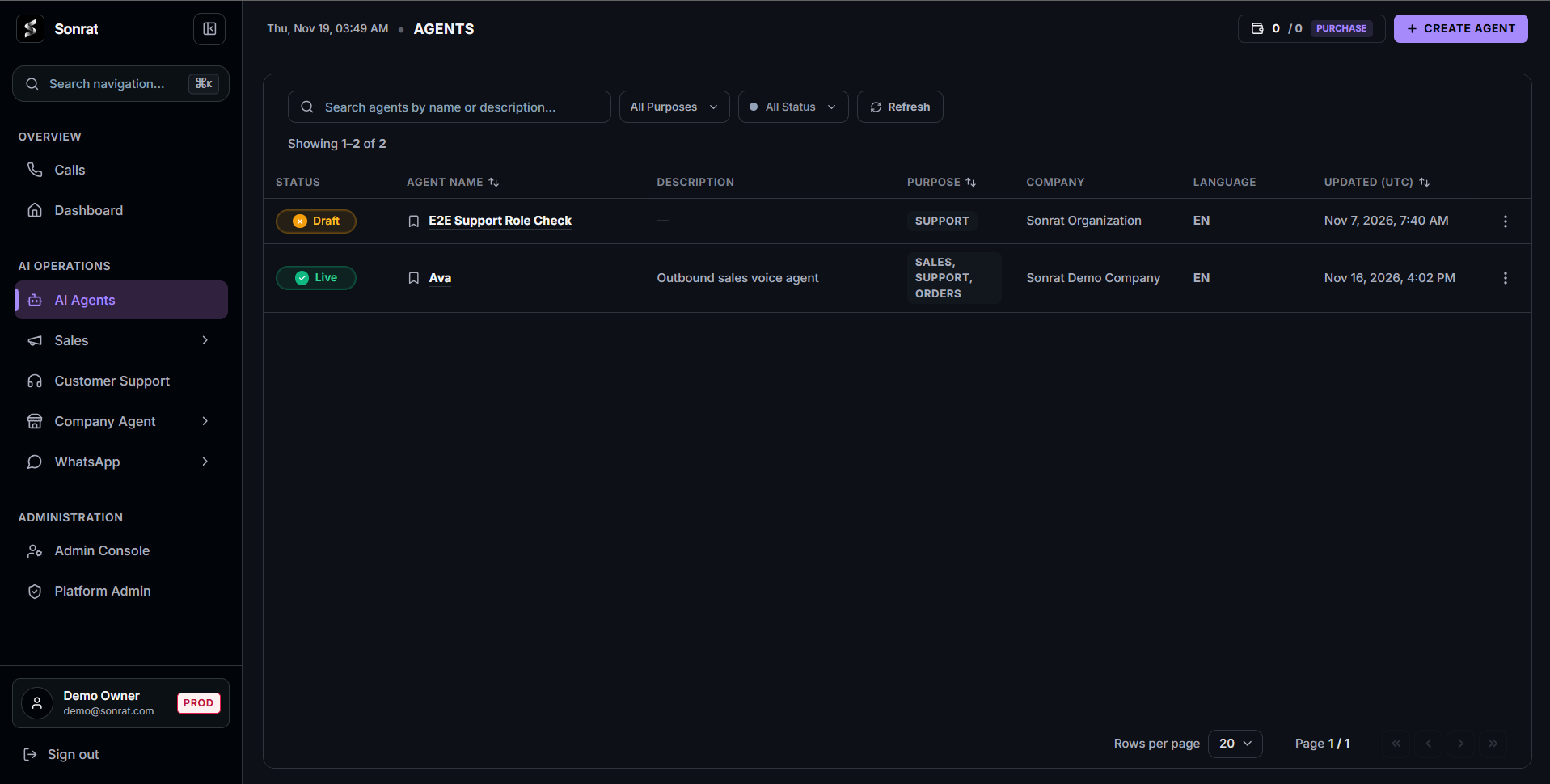
Write a short purpose statement and name the agent so your team can recognise it. Sonrat.ai’s public agent screen shows names, purposes, languages, and status. These details help distinguish a draft experiment from the agent your team intends to use.
Keep the script flexible and the facts separate
A script can describe the opening, the questions to ask, and the order summary to read back. Put changing facts such as opening hours and product details in maintained business knowledge rather than repeating them throughout the script.
Include examples of incomplete requests. If a caller asks for “the usual,” the agent needs to ask what they mean unless a connected system supplies reliable order history. A natural tone should not become permission to guess.
Connect only the actions the job needs
List the tools required for this purpose, along with the information each action needs. A catalogue lookup and creating an order have different consequences; the agent should gather and confirm the relevant details before an action changes a business record.
Write a fallback for missing information and failed tools. The customer should know whether a request was completed, recorded for review, or still waiting for a person.
Review the exact version before publishing
Test the intended task, a request outside its scope, an unavailable answer, and a handoff. Check both the conversation and the resulting record.
Confirm the editor, draft, review, and publishing controls available in your Sonrat.ai account. Keep a note of what changed so the team can understand which instructions produced a particular conversation.